

ML System Design 101
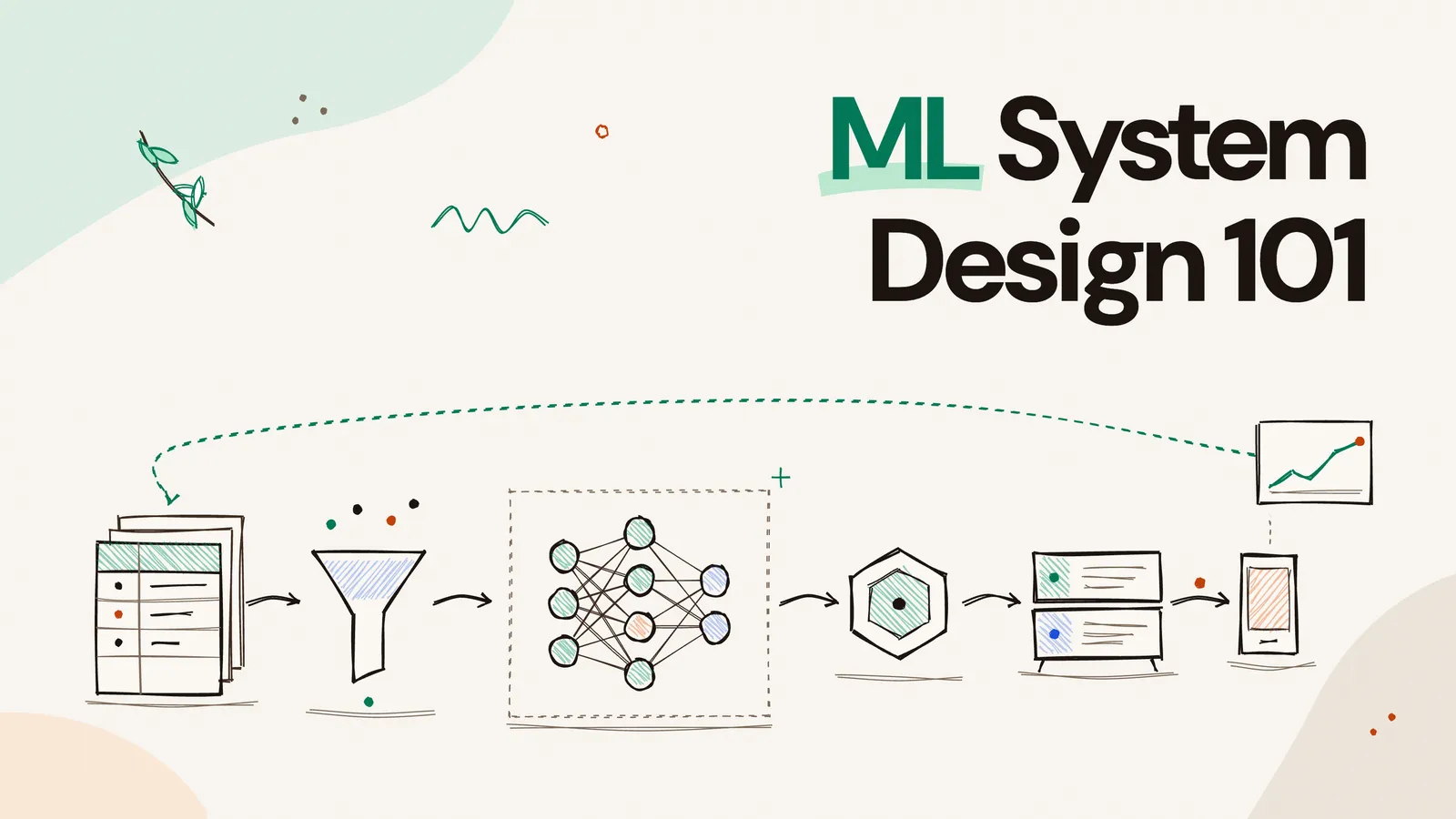
This course covers the first layer of ML system design: framing the problem, building data and features, training and evaluating models, serving them, and watching them after launch.
 Ex-Amazon
About this course
Machine learning system design interviews ask you to build a system whose core behavior is learned from data. Your system design skills still help, but they are not enough. You also have to say what to predict, where the labels come from, how to know the model works, and what breaks after launch. This course covers that first layer, one stage at a time.
Each section takes one stage of the ML lifecycle and teaches it as a standalone topic, with the questions interviewers actually ask about it.
What You Will Learn
- How to turn a product goal into an ML problem, and when not to use ML
- Where training labels come from, and the biases and leakage hidden in them
- How to choose and encode features
- How to compute features for training and serving without skew
- How to pick a baseline model and set up reproducible training
- How to evaluate a model offline with the right metrics and data splits
- How to serve predictions within a latency and cost budget
- How to launch a model safely with shadow mode, canaries, and A/B tests
- What to monitor after launch, and when to retrain
- Optional: embeddings and approximate nearest-neighbor retrieval
- Optional: handling cold start and exploring to gather new data
- Optional: fairness, privacy, and abuse resistance
How This Course Works
Each section starts with the simplest approach that could work, such as a rule, a random split, or a nightly batch job. Then it shows where that approach fails, and adds the next idea only when a specific problem calls for it.
Examples stay small and focused on one stage at a time. Full end-to-end prompts like designing a recommendation system are not covered here. Practice those after this course, once you have each stage down.
Who This Course Is For
This course is for software engineers preparing for their first ML system design interviews. You should already be comfortable with core system design: APIs, storage, caching, and queues. You don't need a research background.
This is not a refresher on general system design, and it is not a deep learning theory course.